



I won’t spend $15 on a bottle of liquid stevia at Amazon.com without checking customer reviews.
It would be an understatement, then, that it blows my mind that a guy wanting to sell his house (his HOUSE, for pity’s sake) picks the first agent that comes along.
After all these decades, real estate consumers still find the pool of agents in their town interchangeable. “You’re all alike” is a statement that deserves a slap in polite society, yet people think nothing of using it to describe real estate agents.
So, how does a knowledgeable, hard-working, awesome customer-service-providing agent combat this?
By getting your clients to do it for you, via real estate testimonials (or, reviews as they are more commonly known).
For a digital marketing platform that makes it easy to gather and display your best testimonials, learn more about LeadSites.
Good real estate testimonials are critical

With the proliferation of online review sites, the “oh-I’ll-just-pick-the-first-agent-that-comes- along” tendency will hopefully change. We know from studies that it’s started.
BrightLocal.com, for instance, finds that 89 percent of consumers age 35 to 54 (which includes the average age of buyers and sellers) read reviews for businesses.
Granted, most of them read reviews for hotels, restaurants and doctors. Only about 15 percent of those surveyed claimed to have read reviews for real estate agents.
But each time a new review site goes online and as millennials age, expect that percentage to climb.
You can bet your competitors who use testimonials on websites and in marketing materials understand their power. You should to.
Do real estate testimonials the right way

“You can even include a little “Thank You” gift card for each positive review posted – a good way to incentivize clients at a low cost to you!” says a guy whose website site offers “real estate agent training.”
Another advice giver tells agents to send an email to clients stating the following: “Happy with my service? Leave me a review on _______ with a direct link to your review site of choice.” She then goes on to also advise giving a gift in exchange for a testimonial.
Here’s another: “Motivate Clients to Leave Feedback” followed by a list of things to bribe them with.
The first problem with all of this advice is this: Would you trust real estate testimonials from someone who was incentivized, motivated or otherwise bribed to leave it?
For instance, for a long time Amazon.com didn’t reveal which reviewers were incentivized. Over the past couple of years, however, they’ve been complying with the law and we can now see who was paid or otherwise compensated for their reviews.
I skip right over those, don’t you?
Second is that the aforementioned advice to real estate agents is in opposition to both the terms and conditions of many review sites AND federal law.
“Companies must make it clear when they have paid their customers to write online reviews,” according to Jessica Rich, director of the Federal Trade Commission’s Bureau of Consumer Protection.
And they put teeth behind the warning. Back in 2015 they popped AmeriFreight, a car shipment broker, for posting customer reviews on its website while “failing to disclose that the reviewers were compensated with discounts and incentives.”
And, they’ve since dragged numerous other businesses to court for the same infraction. It’s a great-big hefty fine if you’re caught, plus years of having to report your marketing methods to the court.
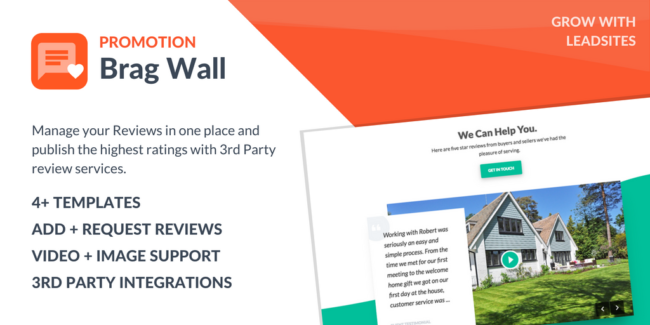
Real estate testimonials done right – See how Brag Wall makes gathering and sharing reviews easy.
The various review sites have their own set of rules, in addition to federal law:
Google – The search giant prohibits using reviews as advertising vehicles. Don’t post your email addy, phone number, links to your social media pages or to your website in the reviews.
Google also prohibits discouraging negative reviews or soliciting positive reviews from your clients, offering money in exchange for reviews and soliciting reviews in bulk.
Yelp — Outright forbids asking clients for a Yelp review. “Business owners should not ask customers to write reviews.” They also warn “Don’t ever offer freebies, discounts, or payment in exchange for reviews.” Learn more about Yelp’s terms here.
Zillow – It cracks me up to read Zillow reviews. Apparently, every single real estate consumer had an absolutely brilliant experience with their agent because anything less than five stars for agents is practically unheard of.
Would you trust this site’s reviews?
About as much as you trust their Zestimates, right?
At any rate, Zillow accepts reviews from anyone with a heartbeat, solicited or unsolicited.
Other things to consider about real estate testimonials
- Like most online content, testimonials are only as good as their recency. If you aren’t consistently posting fresh reviews, you may lose business to the agent who does.
Bright Local finds that the number of consumers who only “take into account reviews written within the past two weeks” skyrocketed from 18 percent in 2017 to 40 percent in 2018.
- An unsigned testimonial, or one signed with first and last initial, has the potential to create distrust in the viewer. Don’t use them.
- Always ask permission from a former client to post their review but never ask him or her to give up intellectual property rights to the content in the review. Oh, and get that permission in writing (or via email) and keep a copy in the client’s file.
- “If you see a good testimonial for your product on another site, don’t just copy and paste it onto your own website,” warns legal professional Leah Hamilton at NeilPatel.com.
“Most review sites have a clause in their Terms of Service stating that user-generated content (such as reviews or testimonials) is owned by the user and licensed to the website.” Instead, she recommends linking to the site’s page where the real estate testimonials appear.
Now that you understand real estate testimonial best practices, learn how to set up a Brag Wall on your Easy Agent Pro website.
Easily get your best reviews to your leads with LeadSites. Here’s how it works.
Want more leads? Here are 16 tips that get more traffic to your website.
Having trouble earning your leads’ trust? Here’s why:
Website Hacks For Your Real Estate Testimonials
What if we told you that all you need to do is tackle one task and you’ll realize a threefold return for your effort? Adding a real estate testimonial (aka social proof) to your website and marketing materials is the task. The return?
- Your real estate testimonial enables consumers to judge your credibility as a real estate authority
- It helps potential clients get to know you
- Social proof instills trust
As a bonus, if done right, it may even help with SEO.
Today, in our continuing series on website hacks (homepage, about me), we’re working on a page on your real estate website that will, if done right, do most of the heavy lifting when it comes to converting leads: your real estate testimonial page.
Want a harder working real estate website? Check out LeadSites, and get started for just $1.
Social proof is the magic elixir of lead conversion
Gone are the days when simply driving a luxury car will show potential clients how successful you are. Agents’ self-proclamations as specialists or top producers also fall on deaf ears.
Consumers in general and real estate consumers in particular are a cynical bunch. They take little that a company says at face value and many demand proof of its claims. And they want to hear it from those they trust: people who have used the services.
Display social proof with Brag Wall and organize all of your reviews in one place – Learn More
Social proof isn’t new, it’s a well-worn phenomenon that now has a name. It describes our reliance on others’ opinions as a shortcut to making our own.
“Advertisers don’t have to persuade us that a product is good, they only need to say others think so,” claims author Rob Henderson at psychologytoday.com.
“Most of us do not have time to increase our knowledge of all merchandise and research every advertised item to measure its usefulness,” he continues.
“Instead, we rely on signals like popularity. If everyone else is buying something, the reasoning goes, there is a good chance the item is worth our attention.”
In a Mintel survey, most of the 2,000 participants claimed that online reviews were the yardstick they used to determine which services they’ll utilize and products they’ll buy.
“Do you read online customer reviews to determine whether a local business is a good business?” was one question in a survey conducted by the researchers at BrightLocal, a review monitoring and SEO tools firm.
A staggering 92 percent answered “yes,” with more than one-third stating that they read them “regularly.”
More than half of these respondents said that the number of stars a business receives is the most important part of a review with “quantity of reviews” and “recency of reviews” placing second and third in importance, respectively.
The majority claim that a business must have between three and five stars to merit their consideration.
The numbers don’t lie: if you truly want to build trust with your leads and convert them to clients, the testimonial page on your website is the place to start.
Which real estate testimonial to use?
It’s tempting to throw up every, single testimonial you receive, but it’s not wise. It’s important to read each one carefully to determine the value it will bring to the reader.
A REALTOR® Magazine consumer survey found that agent testimonials “must contain hard information and not bloviate,” according to the magazine’s Graham Wood. “The panelists were strongly critical of agents who posted testimonials that appeared overly self-serving,” he concluded.
Graham mentioned that panelists viewed one testimonial that credited the agent’s “smart marketing efforts” for selling his home in 19 days for asking price.
Viewers liked this testimonial, with one panelist saying that “The time-on-market figure lent the testimonial particular credibility, considering many online agent reviews are less detailed and sound automated.”
5 Real estate testimonial page best practices
1. Get that CTA in there
Aside from posting testimonials on it, the next aspect of this page that is critical is that it links to a contact page. Easy Agent Pro’s LeadSites link to a scheduling page, making this step a no-brainer for our clients.
2. Cut down on the clutter
The page should also be visually appealing. Cluttered, confused-looking pages will have visitors hitting the back button. Again, we hate to brag, but EAP’s LeadSites’ testimonials page is visually gorgeous.
If you’re designing your own, you won’t need to spend a huge amount of time on it – just enough just enough to let people know which page they’ve landed on and to make the testimonials easy to read.
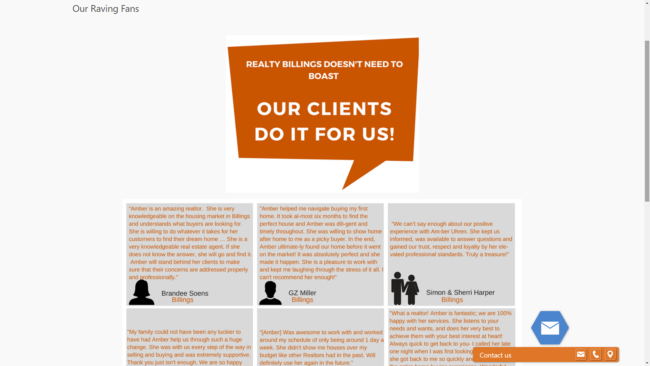
Although we’d like to see the real names of clients, Realty Billings does offer up a clean, easy-to-read testimonials section on their website.
4. Go for quality over quantity when considering real estate testimonials
Not all seemingly “good” testimonials are worthy of placement on the testimonials page. Skip posting the one-liners (We Love Jane Doe!”) and use only those that highlight the value you bring to the transaction.
Keller Williams agent Karin Carr has a knack for choosing the best of the best when it comes to which testimonials she’ll use on her site.
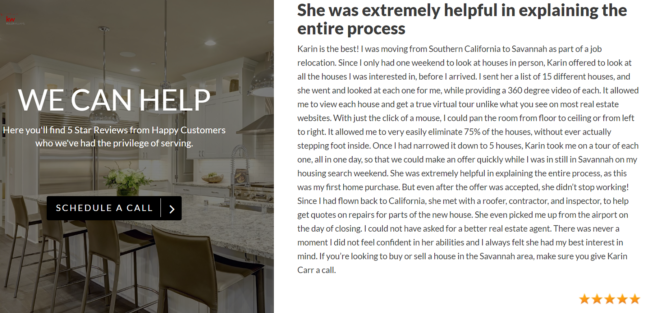
Not only are these testimonials extremely detailed, you agents can pick up some brilliant customer service tips by reading them.
A quality real estate testimonial will “counter actual objections, not just praise your product or counter non-existent objections,” warns Copy Hacker co-founder Joanna Wiebe.
The best reviews also address what consumers consider most important, according to reputation and brand management firm ReviewInc:
- Reliability
- Expertise
- Professionalism
If you solicit testimonials from clients, structure your list of questions to elicit the quality responses you need to post to your testimonials page.
4. Don’t use real estate testimonials from anonymous users or those using initials or screen names
Anonymous reviews are worthless and, apparently, even Google thinks so. The general public distrusts anonymous reviews (“Google User”) or those from people using initials or screen names.
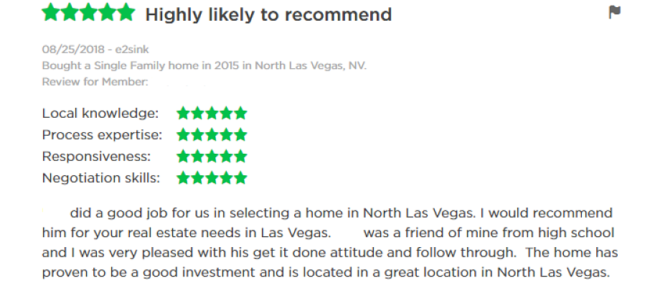
Not only is this Zillow reviewer anonymous, he or she is a “friend” of the agent. Studies show that a reviewer’s subjectivity renders a review useless.
5. Consider including client photos with your real estate testimonials
“Testimonials with photos were significantly more effective at generating recall than testimonials with no photos,” according to Shanelle Mullin at conversionxl.com.
Since people trust other people more than they trust you, adding a photo of the person who left the review adds veracity and helps build trust.
Finally, don’t forget that “recency” is important to those who rely on online reviews to help make decisions. Dump the old ones and keep adding fresh, new testimonials.
Tip:
Use care when soliciting real estate testimonials. Yelp expressly forbids asking for reviews and may ban you if they learn that you actively solicited a Yelp review. Google forbids the exchange of something of value or services in return for a review.
Get the hardest working website in Real Estate – Learn more
Looking for more real estate website hacks? Check out these 16 tips that drive leads.
Drive more traffic to you website with these keywords: