


The difference between a lead and a prospect all boils down to one factor: communication, or the lack thereof.
For instance, you meet Joe at a Chamber of Commerce mixer. He tells you he’s thinking of selling his home so you hand him a business card and, if you’re smart, you try to get some contact information out of him.
Whether he avoids coughing up his information or gives it freely, he is now a lead. You may never hear from him or, you may hear from him a year or even two to three years down the line.
Without communication it’s almost impossible to convert Joe to a prospect, so that first meeting is critical.
If Joe gave you a phone number or email address or even an invite to his Facebook page– in that instant — he jetted from lead status to prospect.
Prospects are those folks who hang out in the top half or so of your real estate sales funnel. If you’re doing even an ok job of lead generation, that section of the funnel is pretty full.
The trick now is to convert all these prospects into clients. Since these are individuals, with unique wants and desires, buyers and sellers, motivated and not-so, and all on their own timetables, real estate prospect conversion isn’t a simple task. But it’s doable.
KLT: The best real estate prospect conversion strategy

KLT: Know, like and trust, in case you’re wondering. Sure, it’s old-school, but it is still true regardless of what you’re selling – people do business with people they know, like and trust.
Because buying and selling homes are such personal transactions, it’s even more important that agents begin working on these three with prospects immediately.
“Building rapport” and “nurturing your prospects” are two common ways to describe your goal during this phase of conversion.
Getting to know and like you
So, how does one become acquainted with someone who may not be communicative? By having one-sided conversations, via your website content, blog posts, social media, direct mail and email.
The latter is the least labor-intensive when you use a monthly newsletter and automate its delivery. In the coming weeks, we’ll dive into that process thoroughly.
In the meantime, get busy creating helpful content to fit the various stages in the process that your prospects are in. Use the content on your website and share, liberally, to social media.
Finally, take a look at your “About” page – after all, it’s the one page on your website that most prospects will read, right?
Is it overtly salesy, boring, trite or otherwise dull? Beef it up and don’t be afraid to show your human side.
I once interviewed an agent and asked one of the same questions I ask all that I interview: “What do you enjoy most about your real estate career?”
As you can imagine, I’m usually given an answer that the agent thinks people want to hear. When this guy spoke from the heart, it about blew me over.
“There are some days where it’s like, is there anything cooler? It’s all about just helping people,” he begins.
“We get stacks of Christmas cards every year. People cry at closings. Just a couple months ago my shoulder was drenched – this woman wouldn’t let me go – ‘I never would’ve done this without you,’ she told me. You can’t put a price on that. You just can’t. It’s just the coolest thing in the world.”
Remember, the people who will read your bio are REAL people. They’ll get excited over what you do if your excitement is genuine. They can relate to going into a profession to make good money, to be able to spend more time with family, etc. so don’t be afraid to be honest.
They can also see through trite or fake answers. So be authentic and they’ll feel as if they know you and they’ll like you. That’s a must when it comes to real estate prospect conversion.
Establishing trust for real estate prospect conversion
Believe it or not, establishing trust with prospects is the easiest of the three strategies. Use your testimonials to do the job for you.
Social proof instills trust in consumers and the statistics back up that claim.
“82% of consumers read online reviews for local businesses while 84 percent trust online reviews as much as a personal recommendation”
BrightLocal.com’s Local Consumer Review Study, 2019
Social proof is ingrained in us. Think of how weird it feels to be the only customer in a restaurant. Or, on the flipside, how your choice of where to eat is validated while standing in a long line at a hot brunch spot. Following the crowd is something we humans are good at.

“Whether the question is what to do with an empty popcorn box in a movie theater, how fast to drive on a certain stretch of highway, or how to eat the chicken at a dinner party, the actions of those around us will be important in defining the answer,” according to Robert B. Cialdini, Regents’ Professor Emeritus of psychology and marketing at Arizona State University and author of “Influence: The Psychology of Persuasion.”
This copy-cat concept is the driving force behind the success of business review sites, such as Yelp.com, product reviews at Amazon.com, movie and video game reviews.
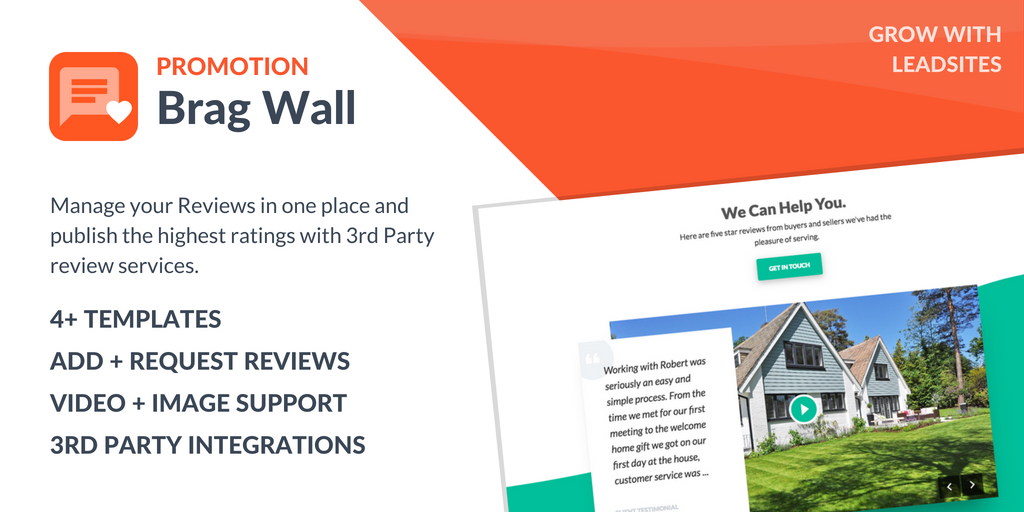
If you aren’t using your best review above-the-fold on your website you’re nuts. If you aren’t incorporating the best on your about page, you’re beyond nuts.
And, if you don’t have a section of your site devoted to testimonials, you’re hopeless.
One of the statistics from Bright Local’s study indicates that the average consumer reads 10 reviews before feeling that he or she can trust the business. So incorporating solid reviews into your real estate prospect conversion strategy is a must for any business.
Run along now and slap 10 of your best reviews on your site – we’ll see you next time.
Check out these 16 real estate website hacks that drive more leads and listings to your website
Need more help converting your leads into clients? This video goes through the step by step process to convert leads: