


Remember when these were mailed to you years ago:
You basically didn’t need a website back then. But, man the times have changed!
For some people, up to 80% of their new leads (leads outside of their sphere) come from the web.
This is huge. And you must learn how to be at least mildly effective at generating online leads.
So today, I’m going to show you 5 tips that can help your next real estate website development project.
Why?
Because online leads are crucial for your business and a lead capturing website is required for almost every type of lead generation.
Let’s dive into the top 5 things you can do to increase the number of leads through proper real estate website development:
Click here for a free PDF OF OUR 5 Simple (But Commission Driving) Real Estate Website Development Tactics
FREE PDF OF OUR 5 Simple (But Commission Driving) Real Estate Website Development Tactics

1) Speed Can Kill Online: Here’s how it impacts real estate website development
Here’s the deal:
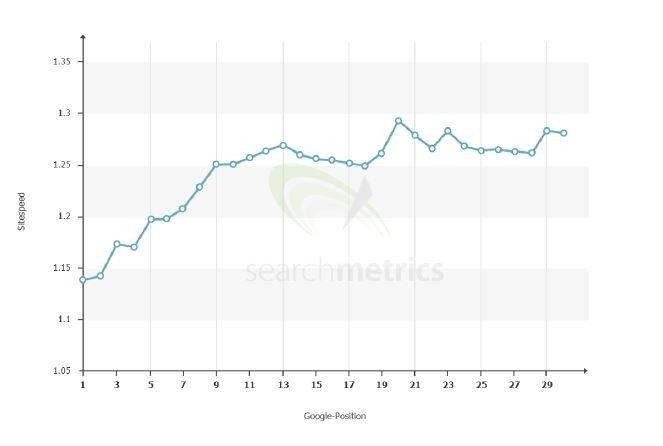
I can show you all sorts of graphs about load speed. Like this one showing its impact on SEO:
And this one:
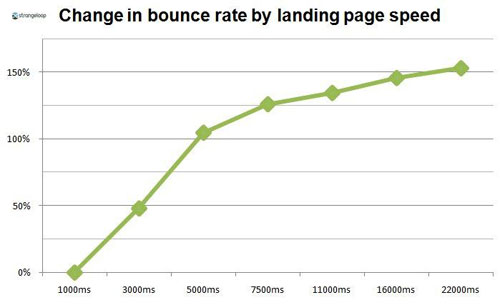
But:
At the end of the day, you simply need a fast site!
Here’s why:
- People will go do research on a different site if it loads too slowly
- Your landing pages will lose leads
- You will dip in the SEO rankings
- People who click your links from social media will click back before your website loads
- People who you email your URL too will never wait for it to load
These are all bad things.
And most cheap hosts or cheap real estate website providers give you slow hosting.
Here’s how you can fix that: (You don’t have to worry about any of this if you have a LeadSite by Easy Agent Pro. We typically achieve under 2 second load times for most pages).
- CDN:
- You can enable a free CDN like Cloudflare on your website if you currently don’t have one. CDN stands for “Content Delivery Network.” It basically means that all of your images, codes, and big files are delivered by an even faster server than your host. This dramatically speeds up your website!
- Caching:
- You’ll want to make sure to use Caching on your real estate website. The issue here is that most caching options don’t work with IDX feeds. So, I recommend checking out Super Cache or Speed Booster Pack if you have a WordPress website. These will help your site as much as possible without hiring an expert.
- Server Settings (hire someone):
- If you are using a standard host like Bluehost or GoDaddy, I highly recommend having someone work on your server settings. They will do things like enable GZip compression and make sure your TTFB (time to first byte) are enabled. If you don’t have these done or if you’re using a service that has cheap hosting, you almost never will have a fast enough website to rank on Google.
- Image Compression For Bloggers:
- If you are a blogger, consider adding an image smushing tool like WP Smush.it or Ewww. These tools can cut your image size down dramatically. And thus decrease the time it takes for your website to load.
Hopefully those 4 tools help you speed up your website! There are tons of nerdy details that you could get into to speed up your website. But at some point you just have to worry about selling real estate. These 4 points should keep your website fast enough to rank highly on Google and keep the bounce rate down.
2) The LeadSites Difference
With Leadsites you’ll unlock the power of internet marketing. LeadSites are built of completely custom apps designed to capture leads, like InstaFarm to dominate Google and Texty to make following up with your leads a total breeze. Check it out in the video below!
3) The Most Important Keyword You Must Optimize for
Pay attention:
Most real estate website development projects fail to do this one simple thing!
They don’t attempt to rank for their name.
If you’re looking to start real estate SEO, the first keyword on your list should be your real estate name.
Why?
Well, the good people at Zillow, Realtor.com, and Trulia have started optimizing their websites for your name.
Quick: Go Google yourself with the word “Realtor” or “real estate agent” after your name.
What comes up?
I bet the results include some of the above companies.
Here’s what you have to do:
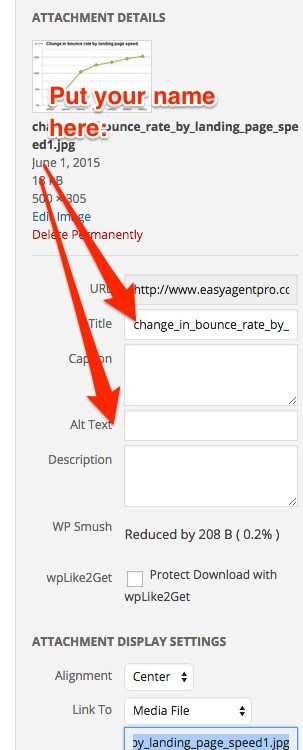
You’ll want to make sure to create images on your new website that include your name on the SEO tags.
You can do that by putting your name as the keyword for the “Alt” and “Title” boxes:
Next, you’ll want to include your name and team name on the pages.
PRO TIP: You can also consider using this keyword when you register your real estate domain name.
You can do this by adding it in the footer or header of your design. Why in the footer? Simple: Then it will show up on every page no matter what! We do this for you with LeadSites:

4) How To Setup Internal Linking Properly During Real Estate Website Development Can Impact SEO
What do you really want when it comes to your real estate website?
The answer is probably traffic.
One of the best ways to increase your search engine rankings (and thus get more traffic) is to increase your internal linking!
In fact, internal linking is the only thing it took for Easy Agent Pro to rank #1 for “Real Estate Slogan’s”
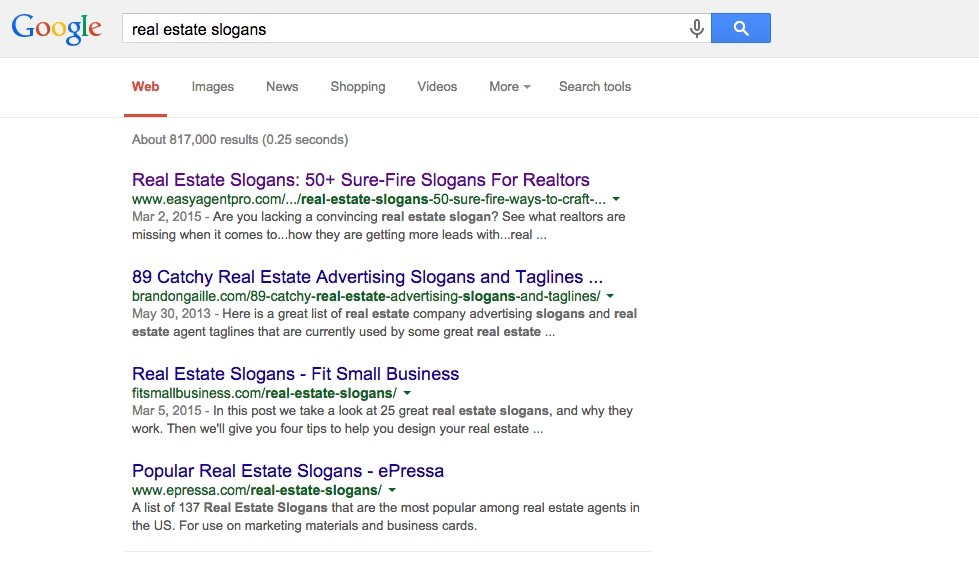
Here’s how it works:
You have a page on your website that is trying to show up on Google for “Keyword #1.”
And then you have a bunch of other pages on your website.
Right?
You want to link to the 1st way from a few of the other pages with Keyword #1 as the link text.
Example: Real Estate Slogans is my link text when I link to the Easy Agent Pro article about slogans!
We believe that this is one of the strongest ways to build results on Google and include it in all of our LeadSite templates.
5) Building Trust And An Audience Is Almost More Important Than Conversion To Lead
Finally:
When it comes to real estate websites, the best thing you can do is build an audience.
There are several strategies to do this, and they are all more important at generating revenue than any SEO or marketing hack.
Here they are:
- Real Estate Farming: When it comes to building an audience, that’s really easy to achieve if you limit yourself to one very specific geographic region. You can create a website that becomes the hub of social events for a small neighborhood or region. This tactic makes it easy to build a loyal following as opposed to a ‘spread yourself thin’ strategy.
- Cultivating Responses Through Email Marketing: Email is still the most profitable tool out there for generating revenue online. You can use it to build an audience and trust around your real estate website development project.
- Blogging: Blogging puts your thoughts on the internet. Not only is a great tool for social media and SEO traffic generation, but it’s an awesome tool to build up a following. If you consistently offer sound advice, you will generate interest from potential home sellers and buyers near you.
What Do You Think?
These 5 ideas should help you do two things:
1) Get more traffic
– & –
2) Convert more leads
Are you struggling to implement any of the ideas on your real estate website or to achieve these two results?
Do you need more clarification?
Let me know in the comment section below and I’ll be sure to help you out!